DART+ Coastal North
DART+ Coastal North Introduction
The extended electrification of the Northern Line will, in so far as possible, remain within the existing railway corridor. However, a limited number of infrastructural interventions have been identified, which require additional land take e.g. substations, bridge modifications and construction compounds.
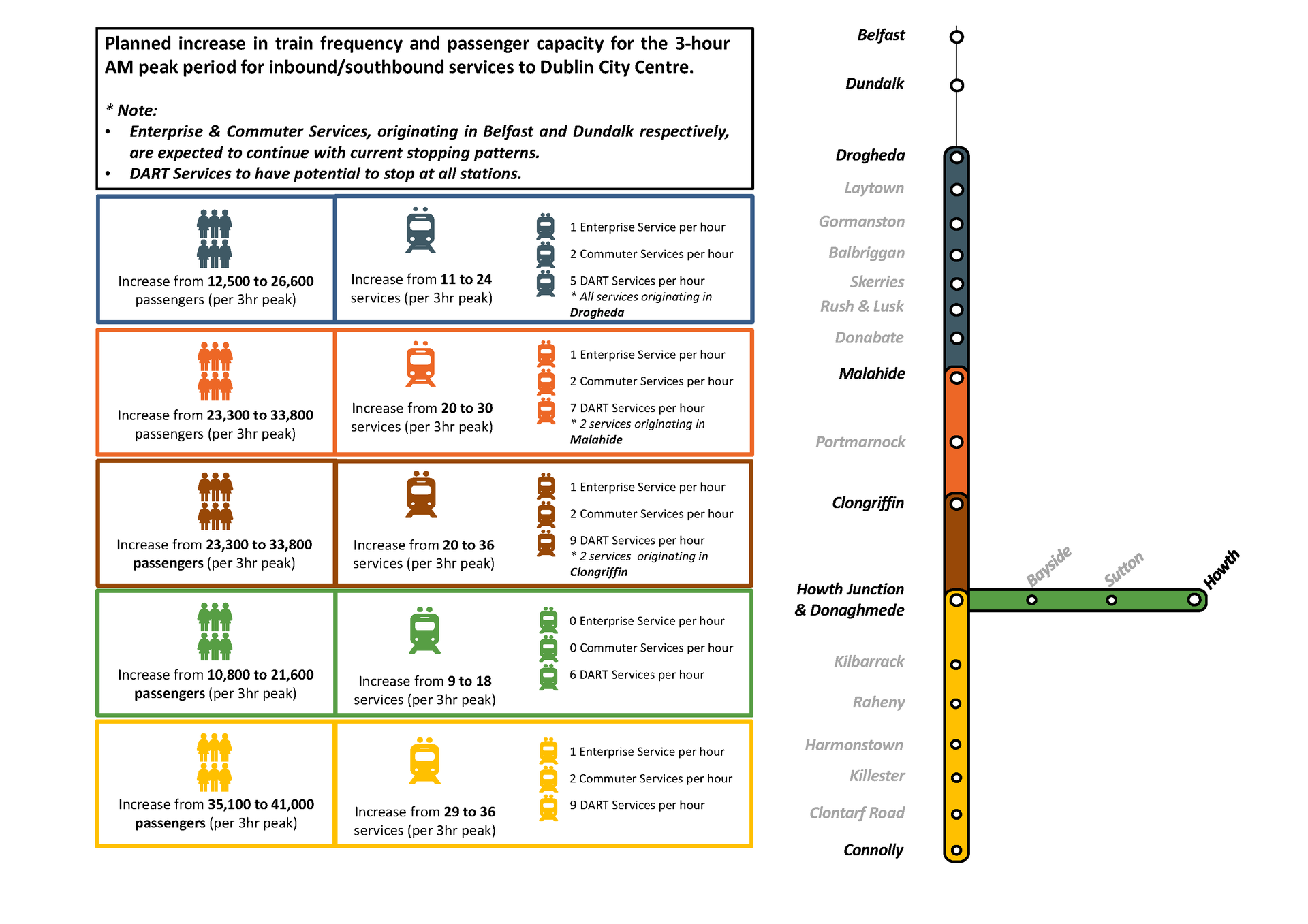
For an accessible version of the Train Frequency graphic please click on this link.
The project will:
- Extend the electrification of the Northern Line from Malahide to Drogheda (circa 37km), including necessary re-signalling of the line;
- Facilitate the future increase in capacity and frequency of trains through the construction of train stabling and other necessary rail infrastructure improvements in the vicinity of Drogheda MacBride, Malahide, Clongriffin and Howth Junction & Donaghmede Stations;
- Implement significant upgrades and enhancements at Howth Junction & Donaghmede Station to deliver accessibility improvements and provide for a better overall customer experience at the station.
- Deliver the infrastructure at Howth Junction and Donaghmede Station that will enable the operation of both a DART shuttle service on the Howth Branch Line as required, and/or a direct through service to/from Dublin City Centre, allowing for the capacity and frequency of DART+ services on both the Northern, and Howth Branch, lines to be maximised and to help future-proof the network;
- Support growing communities, businesses, and future development by providing high-quality integrated public transport services in line with Government policy including the National Planning Framework and Climate Action Plan..
Delivery of the DART+ Coastal North project will support existing communities along the railway and support future sustainable development. The project will serve all existing stations along the railway corridor between Dublin City Centre and Drogheda MacBride Station, including those located on the Howth Branch, with electric powered trains that have a lower carbon footprint than the existing diesel trains. The frequency and quality of service will provide a viable transport alternative to communities along the route and help encourage people to migrate from private car use. This will assist Ireland in reducing greenhouse gas emissions from transport and help combat climate change.